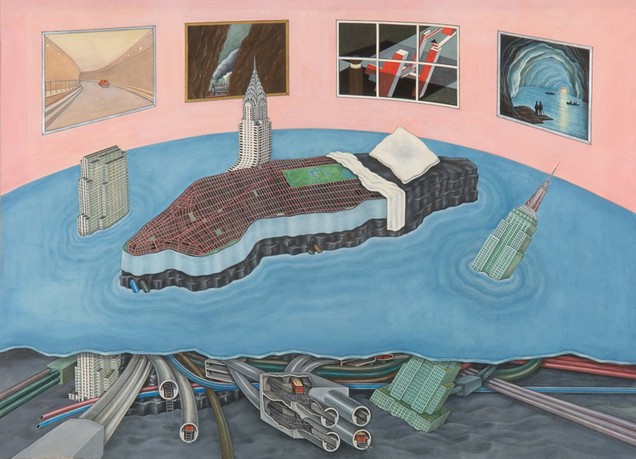
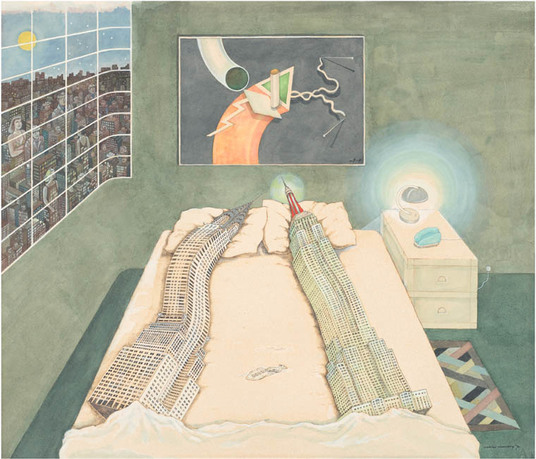
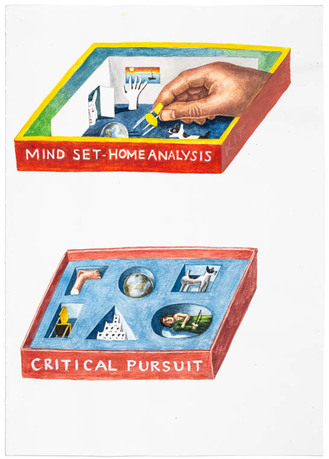
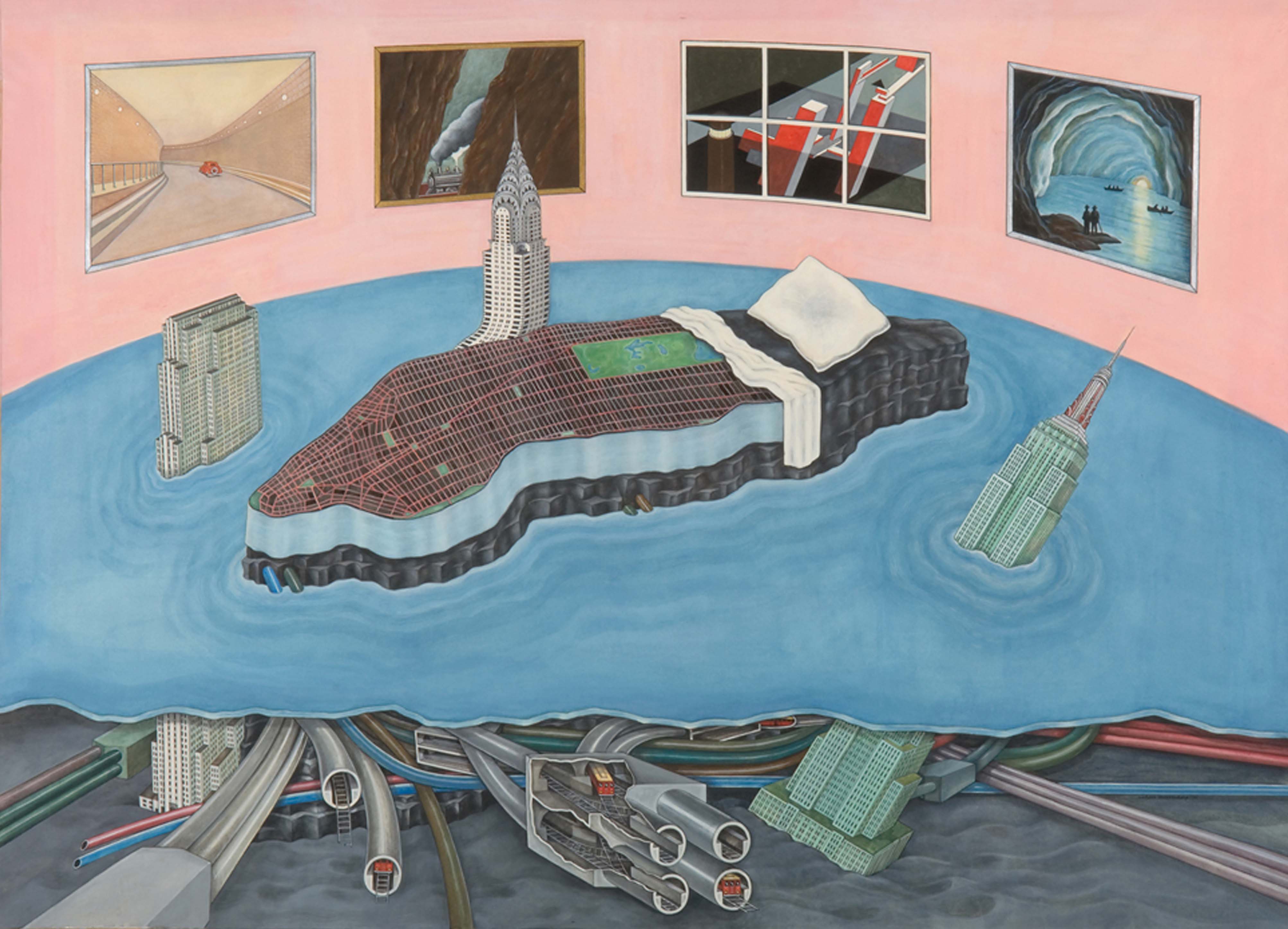
Madelon Vriesendorp, “Freud Unlimited,” Ithaca, New York, 1975. Watercolor and gouache, 21 1/4 x 27 1/2 in. Courtesy Madelon Vriesendorp
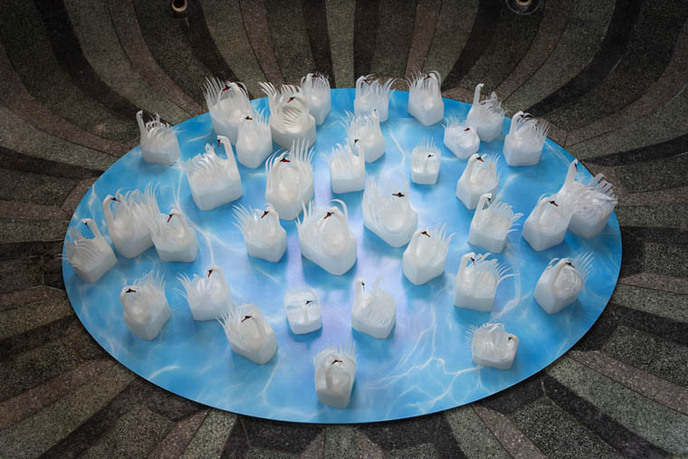
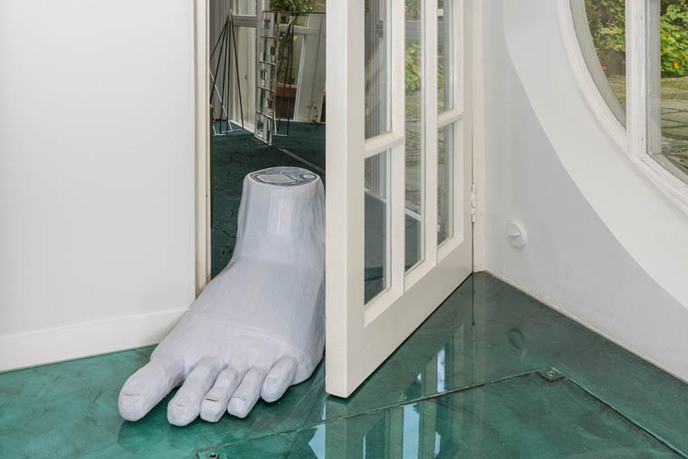
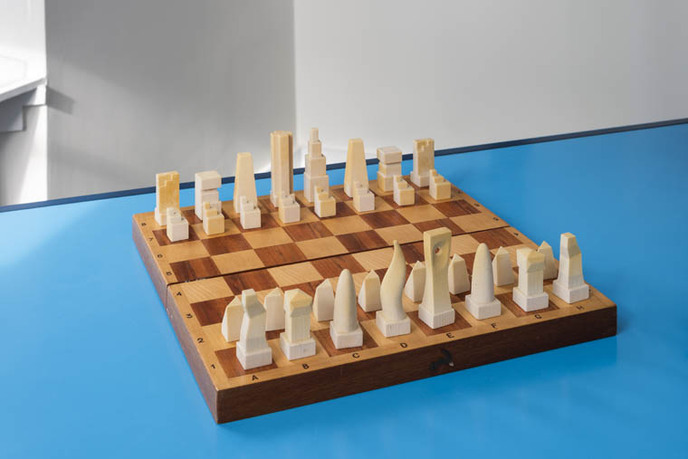
Relatively little known to the broader public as an artist in her own right, Madelon Vriesendorp’s work and its distinct visual language is familiar to many, first popularized on the cover of Rem Koolhaas’s Delirious New York: A Retroactive Manifesto for Manhattan (Oxford University Press, 1978). This monograph seeks to reclaim Vriesendorp’s rightful place in the histories of art and architecture. It presents a comprehensive overview of the artist’s five-decade-long practice and its key themes. Newly commissioned essays by art, architecture and design historians accompanied by previously unpublished material from the artist’s studio, including her most recent body of work. The book contextualizes Vriesendorp’s work in relation to several key themes: collaboration as a method; craft in twentieth-century art and design; the visual language and methodologies of Surrealism; highlighting her role in founding the Office for Metropolitan Architecture and her innovative use of everyday materials in recent sculptural work.
Madelon Vriesendorp is a multidisciplinary Dutch artist whose work spans painting, sculpture, illustration, and writing. Trained at the Gerrit Rietveld Academie and Central Saint Martins, she cofounded the Office for Metropolitan Architecture in 1972 with Rem Koolhaas. Since 1976, she has collaborated with architects and artists on drawings for architectural publications, landscape models, films, and object-making. Her work has been exhibited internationally and is held in collections such as The Museum of Modern Art, Centre Pompidou, the Canadian Centre for Architecture, Rijksmuseum, and Het Nieuwe Instituut. In recognition of her contributions to architecture, she received an Honorary Fellowship from the Royal Institute of British Architects (2009), an Honorary Diploma from the Architectural Association (2017), and was awarded the Soane Medal (2025).
Eszter Steierhoffer is director and keeper of polyphony at The Cosmic House. She has a PhD from the Royal College of Art, specializing in the histories and exhibitions of postmodern architecture. She was previously a senior curator at the Design Museum in London and curator of contemporary architecture at the Canadian Centre for Architecture, where she curated several thematic exhibitions to situate architecture in its broader cultural, historical, and sociopolitical contexts. She has edited several books, including Friends of the Divided Mind (Royal College of Art, 2019); Home Futures: Living in Yesterday’s Tomorrow (Design Museum Publishing, 2018); Imagine Moscow: Architecture, Propaganda, Revolution (Design Museum Publishing, 2017); Zoo-topia: Zoo Architecture as Taxonomy of National Representation (Balassi Institute, 2012); and Anatomy of a Street (Balassi Institute, 2010).
Cat Rossi is a design historian active internationally as a researcher, writer, curator, and educator across design and architecture of the twentieth and twenty-first centuries. Her research addresses modern and contemporary design, architecture, and craft; postwar Italian design; club culture; and feminism, with particular attention to questions of social responsibility, environmentalism, and the politics of design. Her publications include Designing Craft in Italy: From Postwar to Postmodernism (Manchester University Press, 2015); The Italian Avant-Garde (Sternberg Press, 2013); and Post-Craft (Sternberg Press, 2022), the latter two coedited with Alex Coles. Rossi was associate professor of design history at Kingston School of Art from 2011 to 2022. Since 2022, she has been professor of architecture at the University for the Creative Arts and co-research lead at the Canterbury School of Architecture.
Françoise Fromonot is an architect and critic based in Paris and a professor of design, history, and theory at the École Nationale Supérieure d'Architecture de Paris-Belleville. She is the author of numerous monographs and essays on contemporary architecture, including Glenn Murcutt: Buildings and Projects (Thames & Hudson, 1995/2003) and Jørn Utzon: The Sydney Opera House (Electa, 1999), both of which received an architecture book of the year award from the French Academy of Architecture. She edited Transforming Landscapes: Michel Desvigne Paysagiste (Birkhäuser, 2020), a monograph on the large-scale projects of French landscape architect Michel Desvigne. She is a former contributing editor to l’Architecture d’Aujourd'hui and joint editor of le visiteur. She is a founding member of the Paris-based architecture journal Criticat. Fromonot has taught at Cornell University, Rice University, the Academy of Fine Arts Vienna, and the Berlage Institute.
Jennifer Higgie is an Australian writer and occasional curator based in London. She is the author of The Other Side: A Journey into Women, Art and the Spirit World (Weidenfeld & Nicolson, 2023); The Mirror and the Palette: 500 Years of Women’s Self-Portraits (Weidenfeld & Nicolson, 2021); and an upcoming novel, Bedlam (Verso, 2026). She also presented a five-part essay series on BBC Radio 3. Higgie is the inaugural editor of the National Gallery of Australia’s The Annual and host of its podcast Artists’ Artists. She served as reviews editor of frieze magazine from 1998 to 2003, as coeditor with Jörg Heiser and later Dan Fox until 2017, as editorial director from 2017 to 2019, and as editor-at-large until 2021. She has also served on major arts award juries and advisory boards.
Lily Jencks is chairwoman and keeper of vision at The Cosmic House. Previously, she served as director of The Cosmic House from 2021 to 2023. An architectural and landscape designer, she founded Jencks Squared, a design company with Charles Jencks, her father, in 2010, and collaborated with him on projects in South Korea, Scotland, and the new exhibition space at The Cosmic House. She taught design units Dip13 and Exp13 at the Architectural Association from 2015 to 2021 and serves as a jury member of the World Landscape of the Year prize. She was coeditor of Dirt (MIT Press, 2012) and has had her design work published in books and journals, including Homes for Our Time (Taschen, 2020); Gardens Design Journal; and Space Magazine.
Lev Bratishenko is a curator and writer and the twister of meaning at The Cosmic House. His recent projects include 21 Games You Can Play With A Cosmic House (The Cosmic House/Jencks Foundation, 2023); How to: Mind the Moon (The Cosmic House/Jencks Foundation, 2023); For Those Who Will Come (The Cosmic House/Jencks Foundation, 2023); How to: Do No Harm (Canadian Centre for Architecture, 2022); How to: Reward and Punish (Canadian Centre for Architecture, 2021); How to: Disturb the Public (Canadian Centre for Architecture, 2019); and How to: Not Make an Architecture Magazine (Canadian Centre for Architecture, 2018). He was the inaugural Curator Public at the Canadian Centre for Architecture from 2016 to 2023. He was editor of It’s All Happening So Fast (Canadian Centre for Architecture, 2016) and The Other Architect (Canadian Centre for Architecture, 2015). His writing has appeared in publications including AA Files, Abitare, The Architectural Review, Arkitektur, Architect’s Newspaper, Canadian Architect, Cabinet, Fazer, Gizmodo, The Globe and Mail, The Guardian, Icon, Literary Review of Canada, Mark, Tribune, Triple Canopy, and Uncube.
Stinsensqueeze (STSQ) is a graphic design studio, founded by Stina Pariente Gromark and Louise Naunton Morgan, who specialize in publications, visual identities, exhibitions, typefaces, art direction, and digital platforms for individuals, commercial brands, and cultural institutions. Through careful analysis of content and context, they support clients and collaborators to fully communicate their ideas, delivering appropriate solutions with both a functional and emotional impact. Their past clients included Assemble, Arts Council, Hayward Gallery, Design Museum London, Moderna Museet, Rizzoli, among many others. In parallel to commissioned work, the studio initiates its own published projects, working closely with artists, curators, writers, and designers, allowing them to fully shape a project from the very start to the end. Naunton Morgan is a graduate of Central St Martins; Pariente Gromark is a graduate of Central St Martins and the Royal College of Art.
The Jencks Foundation acts as a cultural laboratory to promote critical experimentation in the expanded field of architecture through the lens of post-modernism. The foundation’s program builds upon the multivalent legacy of the late writer, critic, designer, and teacher, Charles Jencks, as well as the ideas imbued in The Cosmic House, his post-modernist manifesto and former home turned Grade I listed museum in London, which opened to the public in 2021. The foundation’s program is organized around an annual theme and developed through exhibitions, commissions, residencies, and seminars. It also preserves Jencks’s archive and extensive library as the key site of its laboratory program. The house contains Jencks’s archive from his work as a historian, critic, land artist, and cofounder of Maggie’s Cancer Caring Centres. The foundation opens these resources to the public to encourage study of the architecture and culture of the late twentieth and early twenty-first centuries.